About the Suzuki Method
The Suzuki Method was founded by Schinichi Suzuki in 1945. He noted how children learned to speak through three main components -- listening to their parents, watching and imitating their parents, and repeating. This led him to develop his method of learning violin, believing that, if children could learn to repeat the sounds that they heard and observed through speech, that the same could be said of learning to play an instrument. This is why the Suzuki Method is founded on the below three main principles.


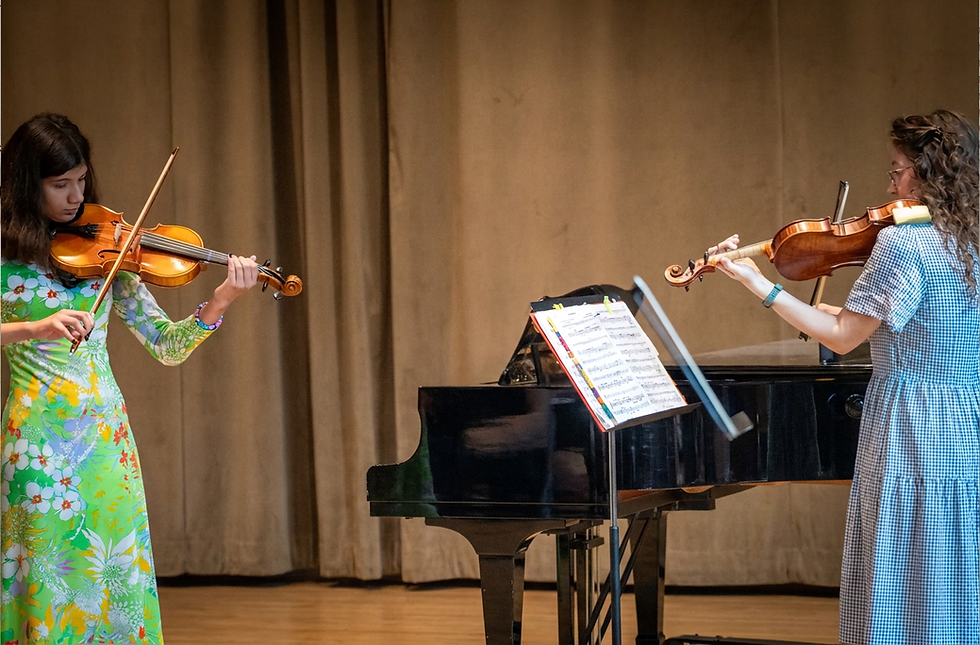
Listening
Listening is a vital part of the Suzuki Method. Suzuki books have corresponding recordings and it is important that, even when children are not yet able to play, that they listen to the CD or other music. Listening assists with ear training, rhythm identification, and learning and lays the foundation for a love of music. The more often a student hears a piece, the easier that piece will be when they start learning it because the student will already know how it should sound.
Every Child Can
The Suzuki Method focuses on the fact that every child has the ability to learn – talent is not innate, it is fostered. Through the Mother Tongue Approach, the idea is that, since all children learn to speak, any child can learn something new just as they learned their native language.
Parental Involvement
This is a key part of the Suzuki Method. Dr. Suzuki said that “a child learns to smile from his parents.” In order to be most effective, parents enroll on the journey of learning violin with their child, so parents or guardians sit in on lessons, assist with lesson activities, and aid the child during at-home practice. The Suzuki triangle is composed of student, parent, and teacher and the interaction of all three is most successful.
